Students in MSLF’s environment accomplish their learning at school, opening precious opportunities of family time and recreation after school and on the weekends.
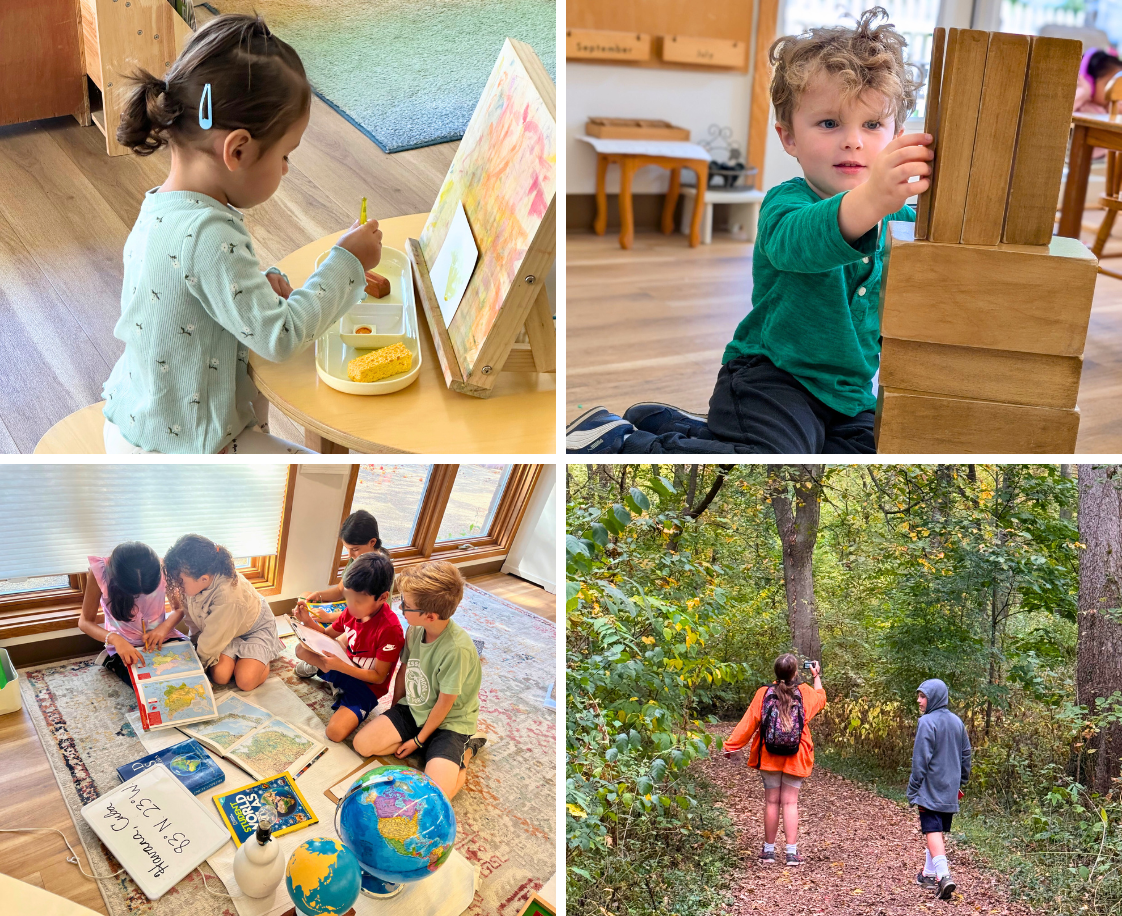
Children in Montessori classrooms are granted many freedoms. They have the freedom to move about the classroom with purpose, to speak with each other, to choose their work, and to choose with whom they work. Lessons are given to the child, suggestions are made. The child has the responsibility to be working and to meet the expectations of society. Such expectations include the ability to read, write and do math. The teacher guides the child through observing his interests, preparing the environment, and following the Montessori curriculum in each subject area.
In addition to following the Montessori curriculum, emphasis is placed on practicing the interpersonal skills of compassion and respectful communication. Every minute of their school day students are exposed to lessons of grace and courtesy, and conflict resolution. Children 15 months “young” learn to use their words, rather than action. The students in the Primary classes discuss issues as they occur and make suggestions of how they could have resolved them better. Once the children are in the Elementary and Adolescent programs they have learned how to navigate many sticky situations that arise inside and outside of the classrooms, and they have learned to show kindness and respect to each other. The adults in a Montessori setting strive to set the example by being positive role models.
What does all this have to do with homework? Montessori Schools do not typically assign daily homework. Dr. Montessori believed that if we do not dictate the work of the child in class, then it does not make sense to dictate the work they choose at home. Therefore, traditional homework is kept to a minimum. Montessorians feel that children spend all day in the classroom learning and need their afternoons and evenings to pursue their personal interests, interact with their families and relax.
Parents know that we encourage activities which constructively direct a child’s pursuits during home hours, while nurturing their interests and building family bonds. A fundamental truth permeates Montessori’s work: children are desperate to learn. In a Montessori class, children are motivated to discover why and how things work. Therefore, homework – in a Montessori sense – is work that the child does at home, as an extension of his or her educational exploration. This work should be meaningful work of high interest to the child, and it should have a purpose.
Many activities may constitute homework, including household chores. Responsibilities at home help the child develop language skills and cultural awareness. Making math a real part of the home environment (pairing socks and counting by twos; dividing a pizza into equal pieces; shopping and making change) and giving the child a voice in family decisions are important to the child’s perception of math concepts and economic geography. Reading with and to your children every day will result in quality family time and confidence building.
The quality of education has become a charged topic of late, with several recent films and documentaries addressing the educational system. The question remains: Will more homework raise academic achievement and test scores? Much has been said about overly programmed after-school schedules; too much homework that steals family time; and an approach to learning that emphasizes memorization and test scores over real understanding and critical thinking. Let’s consider spending quality time with our children, inspiring their natural curiosity and love for learning.
Originally appeared at TribLocal.com http://triblocal.com/lake-forest/community/stories/2011/02/homework-with-a-purpose/
The post Homework with a Purpose appeared first on Montessori School of Lake Forest.